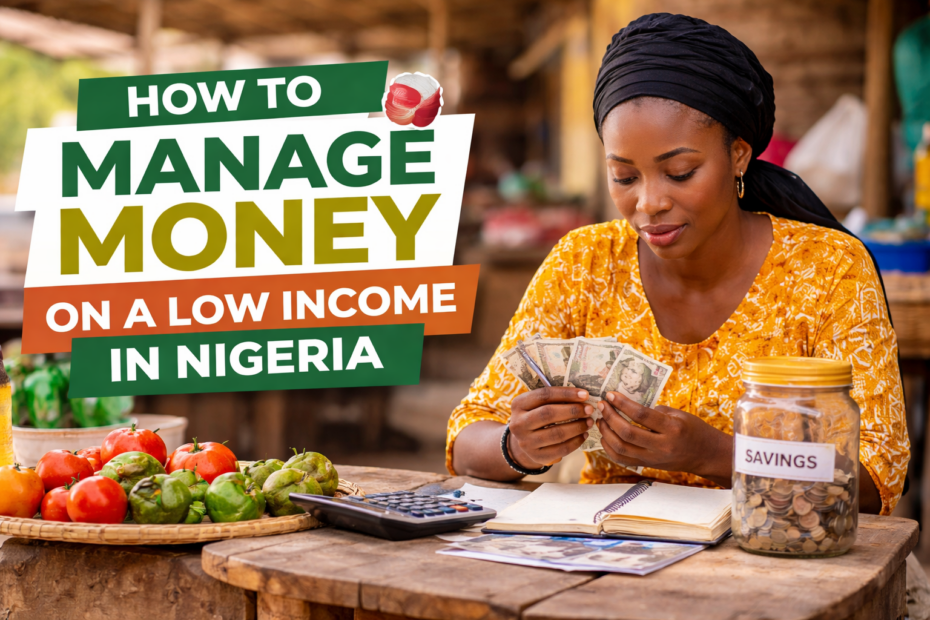
Managing money on a low income is one of the biggest challenges many Nigerians face today. With rising inflation, high food prices, unstable income, and increasing family responsibilities, it often feels impossible to save or plan financially.
However, while earning more money is important, proper money management is even more critical, especially for low-income earners. This article explains practical and realistic ways Nigerians can manage their money effectively, even with limited income.
Understanding the Nigerian Financial Reality
In Nigeria, many people earn irregular income through trading, daily labor, freelancing, or small businesses. Salaries are often low, and expenses such as food, transportation, rent, school fees, and electricity continue to rise.
In addition, cultural expectations sometimes require individuals to support extended family members. These realities make money management difficult, but not impossible.
Recognizing these challenges is the first step toward developing solutions that actually work.
Read Also: How to make money in Nigeria : Method to make money in Nigeria
Budgeting With a Low and Unstable Income
Budgeting is one of the most effective tools for managing money, even on a low income. In Nigeria, where income may change weekly or daily, budgeting should be flexible.
Instead of monthly budgeting, low-income earners can:
-
Budget daily or weekly
-
List essential needs such as food, transport, rent, and bills
-
Separate needs from wants
-
Track spending using a notebook or phone notes
Budgeting helps prevent unnecessary spending and ensures that limited income is used wisely.
Cutting Expenses Without Reducing Quality of Life
Managing money does not always mean suffering. Small changes can lead to significant savings over time.
Practical ways Nigerians can reduce expenses include:
-
Cooking meals at home instead of buying food every day
-
Buying foodstuffs like rice, beans, and garri in bulk
-
Reducing data costs by using night plans or Wi-Fi
-
Planning transport routes to reduce fares
-
Avoiding impulse buying and unnecessary subscriptions
These habits help reduce waste and stretch income further.
Read Also: How to make money online
Saving Money on a Low Income
Many Nigerians believe saving is impossible when income is low, but saving is about discipline, not amount.
Effective saving methods include:
-
Saving small amounts daily (₦200–₦500)
-
Using local saving systems like ajo or esusu
-
Keeping savings separate from spending money
-
Using a piggy bank or cooperative society
Consistent saving, no matter how small, creates financial stability and confidence.
Managing Debt and Avoiding Financial Traps
Debt is one of the major reasons many low-income earners remain financially stuck. Loan apps with high interest rates have worsened the situation.
To manage debt wisely:
-
Avoid borrowing for non-essential items
-
Pay off high-interest debts first
-
Be cautious with loan apps and quick loans
-
Do not borrow to maintain a lifestyle or impress others
Borrowing should be a last resort, not a habit.
Read Also : How to earn money teaching remote freelance skills
Increasing Income Gradually
While managing money is important, increasing income helps reduce pressure. Nigerians can explore small, low-capital opportunities such as:
-
POS business
-
Freelancing (writing, design, data entry)
-
Selling food items or reselling goods
-
Learning free skills online through YouTube and free courses
Income growth should be gradual and realistic, not based on false promises.
Preparing for Emergencies
Unexpected expenses such as medical bills or transport emergencies often push people into debt. Even a small emergency fund can make a big difference.
Low-income earners should:
-
Save small amounts specifically for emergencies
-
Avoid touching emergency savings for daily spending
-
Plan ahead for predictable expenses like school fees
Preparation reduces panic and poor financial decisions.
Read Also : How to start small online Business with almost zero capital
Developing the Right Money Mindset
Money management is not just about numbers; it is also about mindset.
Key attitudes include:
-
Avoiding comparison with others
-
Practicing delayed gratification
-
Saying no to unnecessary pressure
-
Setting realistic financial goals
Discipline and consistency matter more than income size.
Conclusion
Managing money on a low income in Nigeria is challenging, but it is possible. Through careful budgeting, disciplined saving, reduced expenses, responsible borrowing, and gradual income growth, Nigerians can take control of their finances.
Financial stability does not happen overnight, but small daily decisions can lead to long-term improvement. With the right mindset and practical strategies, low-income earners can survive, grow, and build a more secure financial future.
Frequently Asked Questions
How can I save money fast on a low income in Nigeria?
Saving money fast on a low income in Nigeria requires discipline and small daily actions. Start by cutting unnecessary expenses such as daily food buying, impulse purchases, and unused subscriptions.
Save money daily instead of monthly, even if it is ₦200 or ₦500. Separate your savings immediately after receiving income so you are not tempted to spend it. Using local methods like ajo, piggy banks, or cooperative savings can also help you save faster.
What is the 3-6-9 rule of money?
The 3-6-9 rule of money is a simple saving guideline. It suggests saving:
-
3 months of income for basic emergencies,
-
6 months of income for serious situations like job loss or illness,
-
9 months of income for long-term security.
For low-income earners in Nigeria, this rule should be followed gradually by saving small amounts consistently over time.
How can I make ₦5,000 daily in Nigeria?
Making ₦5,000 daily in Nigeria is possible through small, practical hustles. Examples include POS business, selling food items, phone repairs, freelance writing, graphic design, or online tasks.
Offline options such as mini food vending, errands, or reselling fast-moving products can also generate daily income. The key is consistency and choosing a skill or business with daily demand.
What is the 70/20/10 rule of money?
The 70/20/10 rule is a budgeting method where:
-
70% of income is used for daily needs,
-
20% is saved,
-
10% is used for personal enjoyment or giving.
In Nigeria, low-income earners can adjust the percentages slightly, but the principle of spending less than you earn and saving intentionally remains important.
How can I make ₦1,000 per day?
Making ₦1,000 daily in Nigeria can be achieved through simple activities such as phone charging services, selling snacks, doing online micro-tasks, freelance writing, laundry services, or running errands. These small amounts, when earned daily, can add up and help with savings or daily expenses.
What is the 3-jar method?
The 3-jar method is a simple way to manage money by dividing income into three parts:
-
Needs jar – food, transport, rent
-
Savings jar – future and emergency savings
-
Wants jar – personal enjoyment
This method helps Nigerians control spending and ensures savings are not mixed with daily expenses.
What is the 30-day rule to save money?
The 30-day rule helps reduce impulse spending. When you want to buy something that is not essential, wait 30 days before purchasing it. If after 30 days it is still necessary and affordable, then you can buy it. This rule helps Nigerians save money by avoiding unnecessary purchases.
How can I make cash in one hour?
Making cash in one hour in Nigeria depends on location and skills. Common options include quick errands, cleaning services, phone repairs, tutoring, delivery tasks, or selling items you already own. Online options include freelance gigs or quick digital services. The focus should be on services that pay immediately.
How can I save money if I am poor?
Saving money while poor is possible by focusing on small amounts and consistency. Start by tracking expenses, avoiding waste, and saving tiny amounts daily. Even ₦100 saved consistently is better than saving nothing. Separating savings from spending money and avoiding unnecessary debt are also essential steps.
What sells very fast in Nigeria?
Fast-selling items in Nigeria include food items, data and airtime, groceries, phone accessories, thrift clothing, cosmetics, and daily household essentials. Products that solve daily needs and are affordable usually sell quickly. Choosing the right location and pricing is key to fast sales.
How to build wealth with low income?
Building wealth with a low income is difficult but possible when approached with patience, discipline, and strategy. The foundation of wealth building is not how much you earn, but how well you manage what you have.
The first step is controlling expenses. Many low-income earners struggle not because income is too small, but because spending is unplanned. Creating a simple budget and sticking to it helps ensure that money is used intentionally.
Saving consistently is another critical step. Wealth does not start with large savings; it starts with regular habits. Saving small amounts daily or weekly builds discipline and creates capital for future opportunities. These savings should be separated from spending money to reduce temptation.
Increasing income gradually is also essential. Low-income earners should focus on improving skills, starting small side hustles, or learning income-generating skills that require little capital. Wealth is often built slowly through reinvestment of small profits over time.
Avoiding bad debt is equally important. High-interest loans, loan apps, and borrowing for lifestyle reasons can destroy any progress. Wealth grows faster when money is not constantly used to repay debt.
Finally, patience and mindset matter. Wealth building is a long-term process. Comparing yourself with others or expecting quick results often leads to frustration. With consistency, controlled spending, saving, and gradual income growth, wealth can be built even from a low income.
What are the 7 main investment types?
The main investment types represent different ways people grow their money over time. Understanding them helps individuals choose options that match their income level and risk tolerance.
The first type is cash investments, such as savings accounts and fixed deposits. These are low-risk but offer low returns. They are suitable for emergency funds. The second is stocks, where investors buy shares of companies.
Stocks offer higher returns but come with higher risk. The third type is bonds, which involve lending money to governments or companies in exchange for interest. Bonds are generally safer than stocks but grow slower.
The fourth investment type is real estate, which includes land and property. Real estate can build wealth long-term but often requires significant capital. The fifth is mutual funds, which pool money from many investors to invest in different assets. This reduces risk and is suitable for beginners.
The sixth type is business investment, where money is invested in starting or expanding a business. This can offer high returns but depends heavily on management and market conditions. The seventh is alternative investments, such as commodities, agriculture, or digital assets.
For low-income earners, starting with low-risk and low-capital options is advisable. Education and understanding should always come before investing money.
What are the 7 secrets of wealth?
Wealth is rarely built by luck alone. There are principles commonly shared by financially successful people. The first secret is living below your means. Spending less than you earn creates room for saving and investing. The second is consistency. Small actions done repeatedly over time produce significant results.
The third secret is delayed gratification. Wealthy individuals often postpone enjoyment today for greater comfort tomorrow. The fourth is investing early and regularly, even with small amounts. Time is a powerful factor in wealth building.
The fifth secret is financial education. Understanding money, investments, and risks helps people make better decisions. The sixth is multiple income streams. Relying on one source of income increases financial vulnerability.
The seventh secret is discipline and patience. Wealth takes time. Those who stay focused and avoid shortcuts are more likely to succeed. These secrets are habits, not magic formulas, and anyone can practice them regardless of income level.
What is the best investment for low income earners?
The best investment for low-income earners is often self-investment. Learning skills that increase earning power provides higher returns than most financial products. Skills such as digital services, vocational trades, or business management can significantly improve income over time.
After self-investment, low-risk options like cooperative savings, mutual funds, and small business reinvestment are suitable. These options require small capital and allow gradual growth. For many Nigerians, reinvesting profits into small businesses yields better results than passive investments.
Low-income earners should avoid high-risk investments they do not understand. The best investment is one that matches income level, knowledge, and risk tolerance.
How to start from zero to millionaire?
Starting from zero to becoming a millionaire is a long-term journey, not a quick process. The first step is gaining control over finances. This includes budgeting, reducing waste, and saving consistently. Without financial discipline, income growth alone will not lead to wealth.
The next step is skill development. Skills increase earning capacity and open opportunities. Many millionaires began by selling services or products before investing profits. Reinvesting earnings instead of spending them is critical.
Avoiding bad debt and building assets gradually helps maintain progress. Millionaires focus on ownership—businesses, investments, and assets that generate income. Patience, learning from mistakes, and persistence are essential.
What is a silent millionaire?
A silent millionaire is someone who is wealthy but does not display their wealth publicly. They live modestly, avoid unnecessary luxury, and focus on long-term security rather than public attention. Silent millionaires prioritize assets over appearance.
They often invest quietly, save consistently, and avoid debt. Their lifestyle may look ordinary, but their financial foundation is strong. This approach reduces pressure, debt, and financial stress, allowing wealth to grow steadily.
What is the quickest way to gain wealth?
There is no guaranteed quick way to gain wealth without risk. Most sustainable wealth is built gradually. However, increasing income quickly through skills, business opportunities, or solving problems people are willing to pay for can speed up the process.
Quick wealth methods often involve high risk, which can lead to loss. Sustainable wealth focuses on income growth, reinvestment, and patience rather than shortcuts.
How to invest with a small salary?
Investing with a small salary starts with budgeting and saving consistently. Even small amounts can be invested through cooperative savings, mutual funds, or small businesses. The key is consistency, not size.
Low-income earners should prioritize learning before investing. Avoiding debt and reinvesting returns helps build momentum over time. Starting small reduces risk and builds confidence.
What is the 7 5 3 1 rule?
The 7-5-3-1 rule is a simplified money management guideline. It encourages planning spending, saving, investing, and giving in structured proportions. The exact interpretation may vary, but the goal is balance and intentional money use.
For low-income earners, the rule should be adapted realistically. The main value is discipline and awareness, not strict percentages.
What is the best investment for beginners?
The best investment for beginners is education and low-risk investments. Learning how money works prevents costly mistakes. Beginners should start with simple options like savings plans, mutual funds, or small businesses they understand.
Starting small, learning consistently, and avoiding complex or risky investments helps beginners build confidence and long-term success.
Should I invest if I’m poor?
Yes, you can and should invest even if you are poor, but it requires careful planning and a realistic approach. Investing is not only about large sums of money; it is about growing what you have over time. For low-income earners, the key is to start small, focus on low-risk opportunities, and prioritize consistency.
The first step is to stabilize your finances. Avoid investing money you may need for immediate expenses or emergencies. Build a small emergency fund first to prevent situations where you might need to sell investments at a loss. Once a basic financial safety net is in place, you can begin investing even with tiny amounts.
Low-capital investment options include cooperative savings, mutual funds, government savings bonds, micro-investment platforms, or small businesses that generate daily income. You can also invest in yourself by learning skills that improve your income, such as digital services, trade skills, or entrepreneurship.
The biggest challenge for poor investors is patience. Many expect quick returns, but wealth grows gradually. Avoid high-risk schemes or get-rich-quick programs, as they often result in loss. Instead, focus on small, consistent contributions and reinvestment of profits.
In essence, being poor is not a barrier to investing. The right mindset, discipline, and starting with small, low-risk investments can eventually grow into meaningful wealth. The earlier you start—even with ₦100 or ₦500 daily—the more time compound growth and opportunities have to work in your favor.
How to make quick money without investment?
Making quick money without investment is possible, but it requires effort, creativity, and leveraging skills you already have. Quick money usually comes from services or tasks that people need immediately rather than buying or creating products.
For Nigerians, examples include offering services such as errands, cleaning, tutoring, food delivery, or helping with manual labor. Digital opportunities include microtasks online, writing, data entry, or social media management that pay immediately. Freelancing platforms often have small jobs that can generate instant income.
Selling unused personal items is another fast option. Clothes, electronics, or household items you no longer need can be sold for cash. You can also leverage skills such as hairdressing, barbing, phone repairs, or crafts to make daily income.
The key is to focus on high-demand, low-barrier activities. Time is your capital when you cannot invest money, so the faster and more efficiently you provide a service, the higher your earning potential. Combine multiple small income streams to maximize earnings in a single day.
While these methods can provide quick cash, they are usually short-term solutions. For long-term financial stability, it’s important to save part of this income and eventually start investing, even in small ways, to ensure you don’t remain in the “always earning, never growing” cycle.
Where to put money right now?
Deciding where to put money depends on your financial goals, risk tolerance, and time horizon. For low-income earners in Nigeria, safety and accessibility are usually more important than high returns.
The first option is a savings account in a reputable bank. It keeps your money safe, accessible, and sometimes earns minimal interest. Another option is a cooperative savings group or ajo/esusu, which allows you to contribute small amounts regularly and access a larger sum periodically.
For slightly higher returns, you can consider government bonds or treasury bills, which are low-risk and guaranteed by the government. Micro-investment platforms also allow you to invest tiny amounts in diversified portfolios.
If you are willing to take moderate risk for higher returns, consider mutual funds or small businesses that provide daily or weekly income. Avoid putting money in risky ventures or unverified schemes promising unrealistic profits.
The key is to ensure that the money you put away is not needed for emergencies. Always have a separate fund for urgent expenses. Prioritize investments that match your financial goals, and start small—consistency is more important than the initial amount.
What kind of mindset helps you get rich?
Building wealth begins with the right mindset. A rich mindset is not about showing off money; it’s about habits, discipline, and long-term thinking.
First, wealth-minded individuals live below their means. They spend less than they earn and avoid unnecessary debt. Second, they value financial education. Learning about money, investments, and business opportunities allows informed decisions instead of blind risk-taking.
Third, they are consistent and disciplined. Small daily habits—saving, investing, reinvesting profits—compound over time into significant wealth. Fourth, they have patience and delayed gratification. Wealth is rarely instant; it grows steadily when nurtured over time.
Fifth, they adopt an entrepreneurial mindset, looking for solutions to problems that others are willing to pay for. Finally, a rich mindset includes resilience—accepting failure as a lesson, not a permanent setback.
In short, getting rich requires thinking differently from the average spender. It is about prioritizing long-term gains, investing in knowledge, controlling spending, and focusing on opportunities that multiply money rather than deplete it.
What is the best age to start investing?
The best age to start investing is as early as possible. Early investment allows time to benefit from compound growth, where your money earns returns, and those returns earn more returns. Even small amounts invested at age 20 can grow larger than much bigger amounts started at 35.
For low-income earners in Nigeria, the key is to start with what you have, no matter how small. Young investors should focus on learning about money, savings, and low-risk investments before moving to higher-risk ventures. Early investing also teaches discipline and patience, which are critical for financial success.
It’s never too late to start. However, the earlier you begin, the more time you have to recover from mistakes, reinvest profits, and build significant wealth over the long term. Age is less important than starting consistently and wisely.